Refinished bathtub care is simple when you know what to clean with, what to avoid, and how to protect the new surface after reglazing. A professionally refinished bathtub can make an older bathroom look clean, bright, and updated without the cost or disruption of full replacement, but the finish needs the right maintenance to stay in good condition.
The good news is that refinished bathtub care does not require a complicated routine or expensive specialty products. You mainly need to avoid abrasive cleaners, harsh chemicals, rough scrubbers, and habits that can wear down the finish over time.
Whether you recently had your tub reglazed or you are considering professional bathtub refinishing, this guide explains how to protect the new finish, what cleaners to use, what to avoid, and when to call a professional for help.
Quick Answer: Refinished Bathtub Care Basics
The best approach to refinished bathtub care is to clean the tub regularly with a non-abrasive cleaner, use a soft sponge or microfiber cloth, rinse the surface well, and avoid harsh chemicals, abrasive scrubbers, bathmats with suction cups, and standing water.
A simple weekly cleaning routine is usually enough for most homes. For high-use bathrooms, rental units, hotels, or apartment turnovers, the tub may need more frequent cleaning and inspection.
The goal is simple: protect the smooth refinished surface so it stays glossy, clean, and easier to maintain.
Why Proper Care Matters After Bathtub Refinishing
Bathtub refinishing, also called bathtub reglazing or resurfacing, restores the visible surface of an existing tub. Instead of removing the bathtub, a trained technician cleans, repairs, prepares, and coats the surface to create a fresh, smooth finish.
If you are still learning what happens during the service, read our guide on what happens during professional bathtub refinishing.
Once the new finish has cured, the way you clean and use the tub matters. Proper refinished bathtub care can help:
- Protect the glossy appearance
- Reduce staining and soap scum buildup
- Prevent unnecessary surface wear
- Help the finish last longer
- Keep the tub easier to clean over time
A refinished surface is durable, but it should not be treated like unfinished porcelain or old worn enamel. Abrasive powders, rough pads, and aggressive cleaners can damage the surface and shorten its useful life.
7 Care Tips for a Refinished Bathtub
1. Wait Before Using the Tub
2. Use Non-Abrasive Cleaners
3. Clean With a Soft Sponge or Microfiber Cloth
4. Rinse and Dry the Surface After Cleaning
5. Keep Bottles, Soap, and Metal Items Off the Tub Ledge
6. Avoid Suction-Cup Bathmats
7. Use Good Bathroom Ventilation
What to Do During the First 24 to 48 Hours
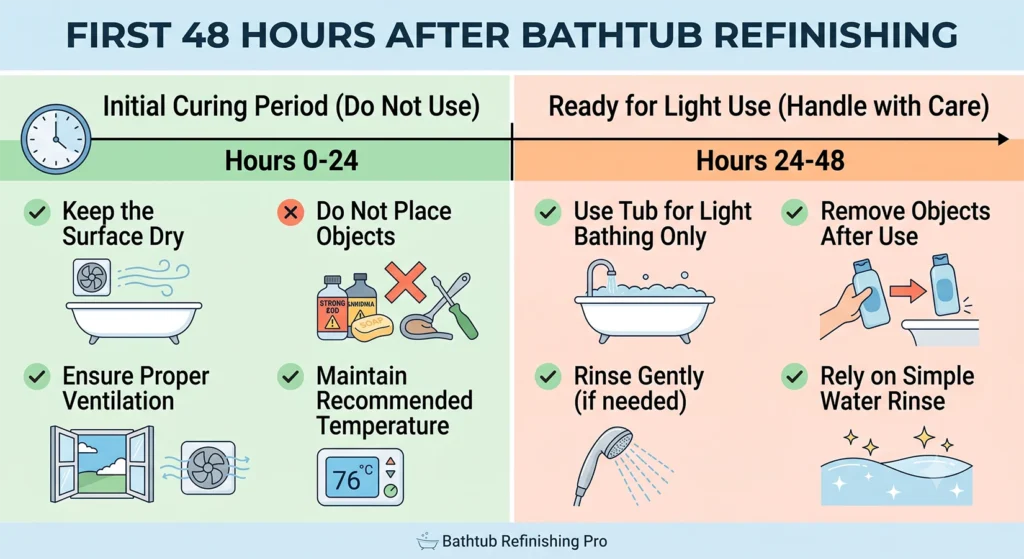
The first day or two after refinishing is important because the new surface needs time to cure properly. Your refinishing technician should give you specific instructions before leaving. Always follow those instructions first.
In general, after a bathtub is refinished, you should:
- Wait until the recommended time before using the tub
- Keep the surface dry during the initial curing period
- Avoid placing bottles, soap dishes, mats, or tools on the surface
- Do not clean the tub until the technician says it is safe
- Keep the bathroom ventilated as instructed
Most residential refinishing projects are completed quickly, but the finish still needs time before regular use. If you are unsure whether your tub is ready, contact the refinishing company before using it.
Use Non-Abrasive Cleaners
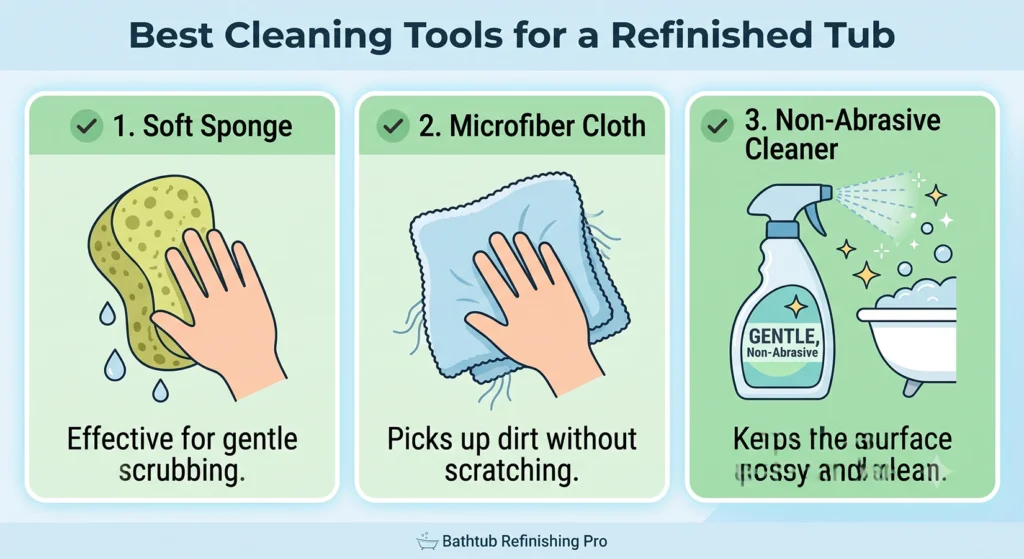
The safest cleaning approach for a refinished tub is gentle and consistent. Use a non-abrasive bathroom cleaner and a soft sponge or microfiber cloth.
For general household cleaning safety, the EPA’s Safer Choice product search can be a helpful resource for finding cleaning products made with safer ingredients. Always read product labels and make sure the cleaner is appropriate for bathroom surfaces.
Good cleaning options often include:
- Mild liquid dish soap diluted with warm water
- Non-abrasive bathroom cleaners
- Soft cloths or microfiber towels
- Soft sponges that do not scratch
The key is to clean regularly before buildup becomes difficult to remove. Waiting too long can lead to heavier soap scum, hard water deposits, and mineral buildup, which may tempt you to use stronger products than the finish needs.
Avoid Abrasive Cleaners and Scrubbers
Abrasive products are one of the most common causes of avoidable damage to refinished bathtubs. They can dull the surface, create small scratches, and make the finish harder to keep clean.
Avoid using:
- Scouring powders
- Steel wool
- Magic eraser-style abrasive pads unless your refinisher specifically approves them
- Rough scrub brushes
- Heavy-duty degreasers
- Acid-based cleaners
- Drain cleaners left on the surface
- Harsh chemical mixtures
If a cleaner promises to remove heavy rust, lime, or mineral deposits, be careful. Some of those products may be too aggressive for a refinished surface. When in doubt, ask your refinishing professional before using it.
Never Mix Cleaning Chemicals
Do not mix bathroom cleaning products. This is important for both your safety and the condition of the tub.
The CDC warns that bleach should not be mixed with ammonia or other cleaners. If bleach or disinfecting products are used, follow the product label, use proper ventilation, and rinse as directed. You can review the CDC’s guidance on cleaning and disinfecting with bleach.
For most routine tub care, you should not need strong chemical combinations. A gentle cleaner used consistently is usually the better long-term approach.
Clean the Tub Weekly
For most households, a weekly cleaning routine works well. If the bathtub is used heavily every day, you may want to clean it more often.
Here is a simple refinished bathtub care routine:
- Rinse the tub with warm water.
- Apply a non-abrasive cleaner or mild soap solution.
- Wipe the surface with a soft sponge or microfiber cloth.
- Rinse thoroughly so no cleaner residue remains.
- Dry the surface with a soft towel if possible.
Drying the tub is especially helpful in homes with hard water. It reduces water spots and mineral buildup, which helps the finish stay cleaner between cleanings.
Do Not Leave Bottles, Soap, or Metal Items Sitting on the Surface
Shampoo bottles, shaving cream cans, soap bars, razors, and metal containers can trap moisture against the surface. Over time, this may lead to stains, rings, rust marks, or discoloration.
Instead, use a hanging shower caddy or shelf that does not rely on suction cups directly attached to the refinished surface. Keep metal items away from the tub ledge when possible.
This is a small habit, but it can make a noticeable difference in how clean and fresh the tub looks over time.
Be Careful With Bathmats and Suction Cups
Many homeowners use bathmats to reduce slipping, but some mats are not ideal for refinished bathtubs.
Avoid bathmats with suction cups unless your refinishing company specifically says they are safe for your surface. Suction cups can pull at the coating and trap moisture underneath the mat.
If you need added traction, ask your refinishing professional about safer options. Some surfaces can be finished with slip-resistant texture or approved safety solutions.
Rinse After Each Use When Possible
A quick rinse after bathing or showering can help prevent soap residue, body oils, and shampoo from drying on the surface.
This does not need to be complicated. After use, simply rinse the tub with warm water and make sure heavy soap residue is washed away. In busy households, this habit can reduce weekly cleaning time and help the surface stay brighter.
Use Good Bathroom Ventilation
Bathrooms naturally collect moisture. Good ventilation helps reduce lingering humidity, odors, and moisture-related problems.
When cleaning or disinfecting indoors, the EPA notes that ventilation is important and that cleaning products should be used according to label instructions. You can read more from the EPA about ventilation when cleaning and sanitizing indoors.
For everyday use, turn on the bathroom fan during and after bathing. If your bathroom does not have a fan, opening a window when weather allows can help move moisture out of the room.
How to Handle Soap Scum and Hard Water Buildup
Soap scum and hard water buildup are common in bathtubs, especially in bathrooms with frequent use. The best way to manage buildup is to prevent it from becoming heavy in the first place.
Start with regular gentle cleaning. If you notice light buildup:
- Use a non-abrasive cleaner approved for refinished surfaces
- Let the cleaner sit only as long as the label recommends
- Use a soft sponge, not a rough pad
- Rinse thoroughly
- Dry the surface with a soft towel
Do not scrape buildup with a razor blade, metal tool, or hard plastic edge. Scraping can damage the surface. If buildup will not come off with safe cleaning, call a professional for advice before trying stronger products.
What About Refinished Showers and Tile?
The same basic care principles apply to refinished showers and tile surrounds. Use gentle cleaners, soft cloths or sponges, and regular rinsing. Avoid abrasive pads, harsh chemicals, and products that sit too long on the surface.
Bathtub Refinishing Pro also provides tile refinishing and shower refinishing for homeowners and commercial properties. If your tub, shower, or tile has been refinished, proper care helps protect the finished surface and keeps the bathroom looking cleaner longer.
Care Tips for Rental Properties, Hotels, and Multi-Unit Bathrooms
Commercial and rental bathrooms often see more frequent use than a typical home bathroom. That means refinished bathtub care instructions should be clear, simple, and easy for cleaning teams or tenants to follow.
For apartments, hotels, senior living facilities, and other commercial properties, consider these maintenance steps:
- Give cleaning teams a written list of approved products
- Remove abrasive powders and harsh chemicals from cleaning carts
- Use soft sponges or microfiber cloths only
- Inspect refinished surfaces during turnovers
- Address chips or damage early
- Avoid suction-cup mats in refinished tubs
If you manage several units, consistent care standards matter. A refinished surface can perform well when it is cleaned properly, but inconsistent cleaning methods can shorten the lifespan of the finish.
For larger projects, Bathtub Refinishing Pro offers commercial bathroom refinishing for hotels, apartments, rental properties, and multi-unit facilities across Asheville, Atlanta, Knoxville, Columbia, Greenville, Spartanburg, and surrounding areas.
When to Call a Professional
Call a professional if you notice damage that looks deeper than normal surface dirt or soap scum. Small issues are easier to address before they become larger problems.
Contact a refinishing specialist if you see:
- Chips in the surface
- Peeling or lifting
- Deep scratches
- Rust spots near the drain or overflow
- Cracks in fiberglass or acrylic
- Discoloration that does not improve with safe cleaning
If your tub is already showing wear and you are not sure whether it needs repair, refinishing, or replacement, you may also find this guide helpful: Top 10 Signs Your Bathtub Needs Professional Refinishing Instead of Replacement.
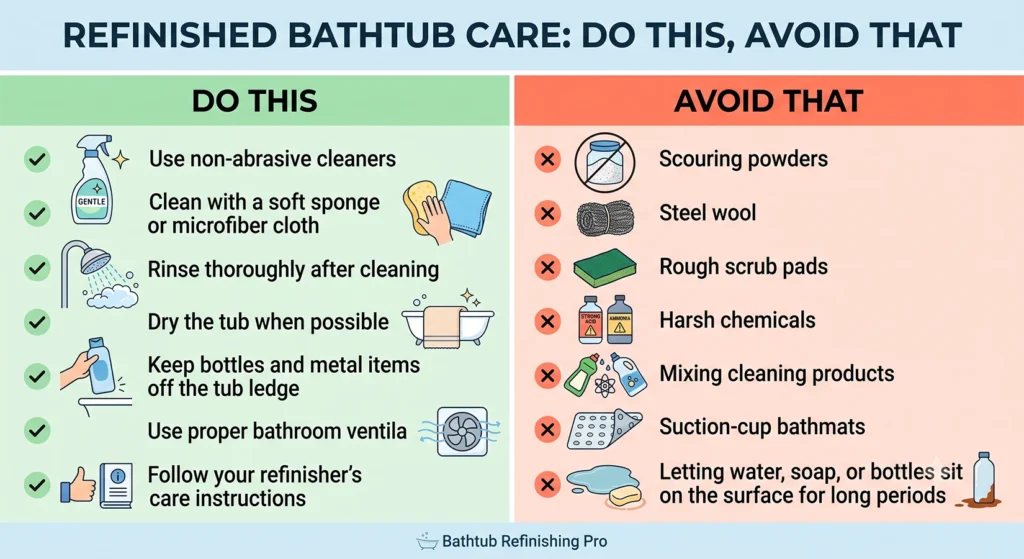
Refinished Bathtub Care Checklist
This refinished bathtub care checklist can help you protect the surface and avoid the most common maintenance mistakes.
Do:
- Use non-abrasive cleaners
- Clean with a soft sponge or microfiber cloth
- Rinse thoroughly after cleaning
- Dry the tub when possible
- Keep bottles and metal items off the tub ledge
- Use proper bathroom ventilation
- Follow your refinisher’s care instructions
Avoid:
- Scouring powders
- Steel wool
- Rough scrub pads
- Harsh chemicals
- Mixing cleaning products
- Suction-cup bathmats unless approved
- Letting water, soap, or bottles sit on the surface for long periods
Frequently Asked Questions About Refinished Bathtub Care
How soon can I use my bathtub after refinishing?
Follow the exact instructions given by your refinishing technician. Many refinished surfaces are ready within about 24 hours, but timing can vary based on the coating system, ventilation, temperature, humidity, and project conditions.
Can I use bleach on a refinished bathtub?
Do not use bleach unless your refinishing professional says it is safe for your specific surface and you are following the product label. Never mix bleach with other cleaners. For routine care, a mild non-abrasive cleaner is usually the better choice.
Can I use a bathmat in a refinished tub?
Avoid bathmats with suction cups unless they are specifically approved for your refinished surface. Suction cups can trap moisture and may pull against the finish.
How often should I clean a refinished bathtub?
Weekly cleaning is a good routine for most homes. High-use bathrooms may need more frequent cleaning. Regular gentle cleaning is better than waiting until heavy buildup forms.
What should I do if my refinished tub gets chipped?
Do not try to fix deep chips with random store-bought products. Contact a professional refinishing company so the damage can be evaluated and repaired properly.
Protect Your Refinished Bathtub With the Right Care
Good refinished bathtub care helps protect the surface, reduce avoidable wear, and keep your bathroom looking cleaner for longer. Keep the routine simple: clean gently, rinse well, avoid abrasive products, and address small problems early.
If your bathtub, shower, or tile is worn, stained, chipped, or outdated, Bathtub Refinishing Pro can help you understand your options. We provide professional bathtub refinishing, shower refinishing, tile refinishing, crack and chip repair, and commercial bathroom refinishing throughout Asheville, Atlanta, Knoxville, Columbia, Greenville, Spartanburg, and surrounding communities.
Contact Bathtub Refinishing Pro today to request a fast, no-obligation quote and find out whether refinishing is the right fit for your bathroom.