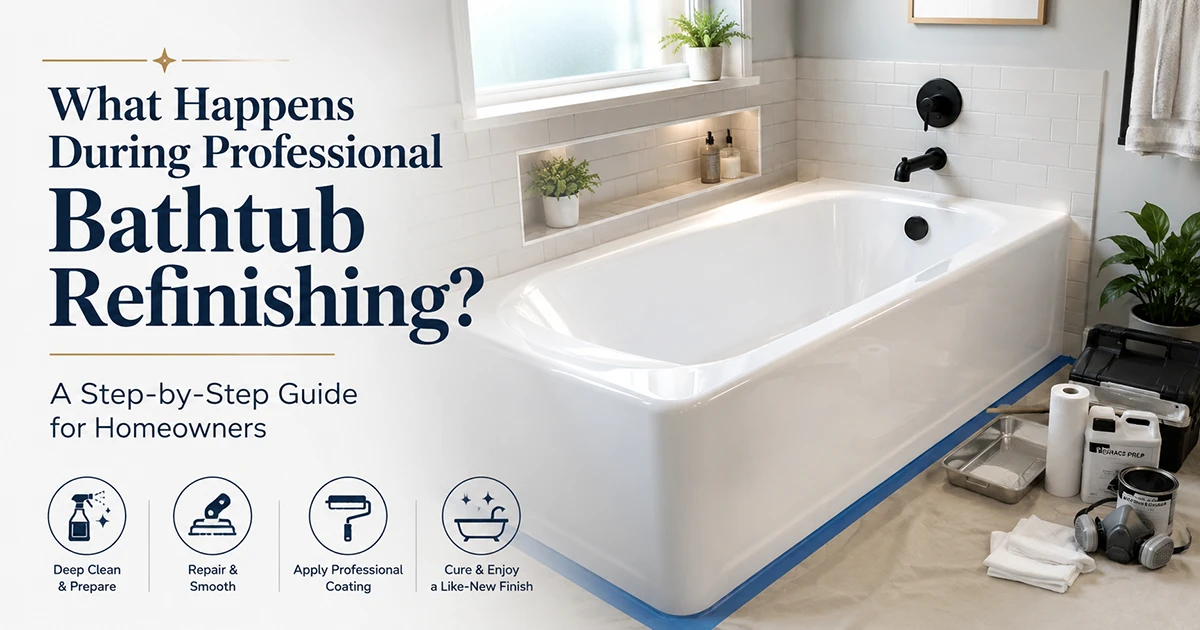
When a bathtub starts looking stained, chipped, dull, or outdated, many homeowners assume replacement is the only real solution. That usually means demolition, plumbing work, tile repairs, disposal costs, and a bathroom that may be out of service longer than expected.
Professional bathtub refinishing offers a different path.
Also called bathtub resurfacing or bathtub reglazing, refinishing restores the surface of an existing tub without removing it from the bathroom. Instead of tearing everything out, a trained technician repairs surface damage, prepares the bathtub, and applies a new finish designed to restore a clean, smooth, glossy appearance.
For homeowners in Asheville, Atlanta, Knoxville, Columbia, Greenville, Spartanburg, and surrounding areas, bathtub refinishing can be a practical bathroom renovation alternative when the tub is structurally sound but cosmetically worn. Understanding the process helps you know what to expect, what makes professional refinishing different from a DIY kit, and how to prepare for a successful project.
What Is Professional Bathtub Refinishing?
Professional bathtub refinishing is the process of restoring the visible surface of an existing bathtub. The tub stays in place, but the worn surface is cleaned, repaired, prepared, coated, and finished to give it a refreshed appearance.
The terms refinishing, resurfacing, and reglazing are often used interchangeably. In everyday customer language, they usually refer to the same basic service: improving the bathtub’s surface instead of replacing the entire fixture.
A refinishing project may be a good fit for tubs with:
- Stains that no longer come clean
- Chips, scratches, or worn enamel
- Dull or faded surfaces
- Outdated colors
- Minor rust spots or surface damage
- A structurally sound tub that still functions properly
Refinishing is not the same as installing a new bathtub. It will not change the shape, size, or layout of your bathroom. However, it can dramatically improve the way the tub looks and feels without the cost, mess, and disruption of full replacement.
Step 1: The Initial Consultation and Surface Evaluation
The process usually begins with a consultation or estimate request. This is where the refinishing company learns about the condition of your bathtub, the type of surface involved, and the results you are hoping to achieve.
A professional may ask about stains, cracks, chips, previous coatings, rust, drainage issues, or whether the tub has been refinished before. Photos can often help the technician understand the condition before arriving.
This step matters because not every bathtub is in the same condition. A lightly worn tub may only need standard preparation and refinishing. A tub with chips, cracks, or rust may need additional repair before the new coating is applied.
A trustworthy refinishing company should give you clear expectations. If refinishing is a good option, they should explain the process, timeline, pricing, and care requirements. If the tub has deeper structural problems, they should be honest about whether repair or replacement may be more appropriate.
Step 2: Bathroom Protection and Ventilation
Before refinishing begins, the technician prepares the work area. This includes protecting nearby surfaces such as floors, walls, fixtures, vanities, toilets, and tile that should not be coated.
Professional bathtub refinishing requires careful control of the work environment. Masking, covering, and taping help create clean edges and protect the bathroom from overspray or dust. Proper ventilation is also important because professional coatings and preparation materials need to be handled correctly.
This is one major difference between hiring a professional and attempting a DIY bathtub reglazing kit. A professional understands how to prepare the space, manage airflow, use appropriate equipment, and apply coatings in a controlled way.
Step 3: Deep Cleaning the Bathtub Surface
A bathtub may look clean to the eye, but soap scum, body oils, mineral buildup, cleaning product residue, and hard water deposits can remain on the surface. If those contaminants are not removed, they can interfere with adhesion.
Professional bathtub refinishing starts with a deep cleaning process. The technician removes buildup and prepares the surface so the new coating system can bond properly.
This step is not glamorous, but it is one of the most important parts of the entire project. A beautiful finish depends on what happens before the coating is applied. Poor cleaning and weak preparation are two common reasons DIY refinishing jobs fail early.
Step 4: Repairing Chips, Cracks, Rust, and Surface Damage
Once the bathtub is cleaned, visible damage can be addressed. Depending on the condition of the tub, this may include filling chips, smoothing scratches, treating rust spots, or repairing minor cracks.
For many homeowners, this is where professional refinishing provides real value. A worn bathtub often has more than discoloration. It may have small impact marks, rough spots, or areas where the original surface has worn thin.
Professional crack and chip repair helps create a smoother, more uniform foundation before the new finish is applied. The goal is not simply to cover damage. The goal is to correct surface imperfections so the final result looks cleaner and performs better.
This is especially important for older porcelain tubs, fiberglass tubs, acrylic tubs, rental properties, and bathrooms that receive daily use.
Step 5: Surface Preparation for Strong Adhesion
After cleaning and repairs, the bathtub surface must be prepared for adhesion. This may involve sanding, etching, bonding preparation, or other professional methods depending on the surface material and coating system.
The purpose of this step is simple: the new finish needs a properly prepared surface to grip.
Skipping or rushing preparation is one of the biggest mistakes in bathtub resurfacing. A coating applied over a slick, dirty, glossy, or damaged surface may look acceptable at first, but it can peel, bubble, or wear prematurely.
Professional preparation helps create a finish that is smoother, cleaner, and more durable than a quick cosmetic cover-up.
Step 6: Applying the Bonding System and Finish Coats
Once the surface is ready, the technician applies the refinishing system. This typically includes bonding materials followed by professional-grade finish coats. The exact products and methods can vary by company, but the goal is to create a smooth, high-gloss, durable surface.
This is the stage most homeowners think of when they picture bathtub reglazing. The worn tub begins to take on a fresh, updated appearance. Outdated colors can often be changed, and dull surfaces can be restored with a cleaner, brighter finish.
Professional application matters. Even coverage, proper technique, controlled drying conditions, and attention to detail all affect the final appearance.
A well-refinished bathtub should look smooth, clean, and professionally restored. It should not look like a rushed paint job.
Step 7: Final Inspection and Cleanup
After the finish is applied, the technician inspects the bathtub and surrounding area. Masking materials are removed, edges are checked, and the bathroom is cleaned up.
This is also when the homeowner should receive care instructions. The first few days after refinishing are important because the new surface needs time to cure properly. Using the tub too soon, placing bottles on the surface, using bathmats with suction cups, or cleaning with harsh chemicals can affect the finish.
A professional company should explain what to do and what to avoid so you can protect your investment.
How Long Does Bathtub Refinishing Take?
Most standard bathtub refinishing projects can be completed much faster than replacement. In many cases, the work itself can be completed in about a day, depending on the condition of the tub, repairs needed, ventilation, and project scope.
That does not always mean the tub is ready for immediate use. The finish needs proper curing time before water, cleaning products, or daily use are introduced. Your refinishing technician should provide specific instructions based on the coating system used.
Compared to replacement, refinishing usually means less downtime, less mess, and fewer moving parts. There is no need to remove the old tub, disturb surrounding tile, replace plumbing, or wait through a larger bathroom renovation schedule.
What Should Homeowners Do Before the Appointment?
Preparing for a bathtub refinishing appointment is usually simple. The refinishing company may provide specific instructions, but homeowners can generally help by clearing the bathroom and making the tub easy to access.
Before the technician arrives, remove shampoo bottles, soaps, shower curtains, bathmats, personal items, and anything stored around the tub. If possible, make sure pets and children stay away from the work area during the appointment.
You do not need to deep clean the tub yourself unless asked. The technician will handle professional cleaning and preparation. However, clearing the space helps the project move more efficiently.
Why Professional Refinishing Is Different From a DIY Kit
DIY bathtub refinishing kits are easy to find, but they rarely match the quality, preparation, equipment, or finish of professional bathtub refinishing. The difference usually comes down to surface preparation, repair ability, coating quality, ventilation, and application skill.
A DIY kit may seem cheaper upfront, but the results can be uneven or short-lived if the surface is not prepared correctly. Peeling, streaking, rough texture, and weak adhesion are common complaints with rushed DIY projects.
Professional tub refinishing is designed for homeowners who want a cleaner, more reliable result without taking on the risk and frustration themselves. It is especially valuable when the tub has chips, cracks, rust, staining, or previous surface damage that needs more than a basic coating.
Is Bathtub Refinishing Right for Every Tub?
Bathtub refinishing is a smart option for many bathrooms, but it is not always the right solution. If the tub is structurally damaged, leaking, unstable, or surrounded by major plumbing problems, replacement or deeper repair may be necessary.
Refinishing works best when the tub is still functional and structurally sound but the surface looks worn, stained, chipped, or outdated.
It is also a strong option when homeowners want a bathroom refresh without committing to a full remodel. For rental properties, hotels, apartments, and residential homes, refinishing can help improve appearance while keeping costs and downtime under control.
Caring for a Refinished Bathtub
After your bathtub has been professionally refinished, proper care helps preserve the surface. The best approach is simple: clean regularly, avoid abrasive tools, and follow the care instructions provided by your refinishing company.
Harsh scrub pads, abrasive powders, bleach-heavy cleaners, and suction-cup bathmats can damage many refinished surfaces. Instead, use gentle cleaning products and soft cloths or non-abrasive sponges.
Good maintenance does not need to be complicated. Consistent, gentle cleaning is usually better than aggressive scrubbing after buildup has already formed.
A Smarter Bathroom Renovation Alternative
Professional bathtub refinishing gives homeowners a practical way to improve the look of a bathroom without the cost and disruption of replacement. By cleaning, repairing, preparing, and refinishing the existing surface, a worn bathtub can be restored to a brighter, smoother, more updated appearance.
For many homeowners, the biggest advantage is simplicity. You can keep the tub you already have, avoid unnecessary demolition, reduce renovation mess, and still make the bathroom feel cleaner and more inviting.
If your bathtub is stained, chipped, dull, or outdated, refinishing may be the affordable bathtub replacement alternative you have been looking for.
Contact Bath Tub Refinishing Pro for a Free Estimate
If your bathtub, shower, or tile surface is worn, stained, chipped, or outdated, Bath Tub Refinishing Pro can help you understand your options. Our team provides professional bathtub refinishing, bathtub resurfacing, bathtub reglazing, tile refinishing, shower refinishing, and crack and chip repair for homeowners and commercial properties across Asheville, Atlanta, Knoxville, Columbia, Greenville, Spartanburg, and surrounding communities.
Contact Bath Tub Refinishing Pro today to request your free bathtub refinishing estimate and learn whether professional refinishing is the right fit for your bathroom.